
Event Data Recorders - A vital part of your investigations!
We take a look into the world of Event Data Recorders, specifically Airbag Control Modules and examine how we can help you in understanding this key investigative area. We have the skills and equipment to assist!
CrashUK
1/24/20264 min read
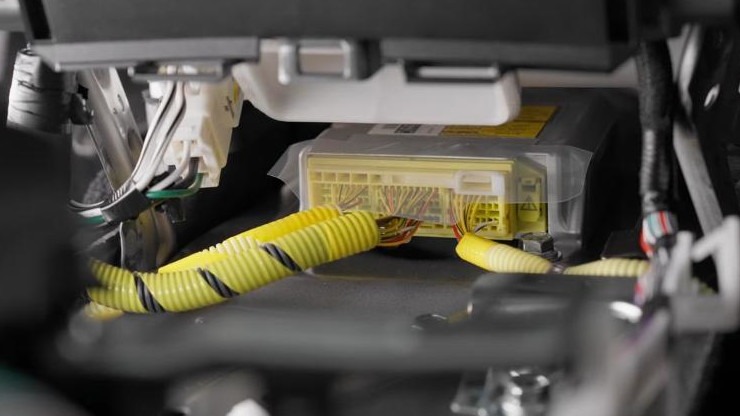
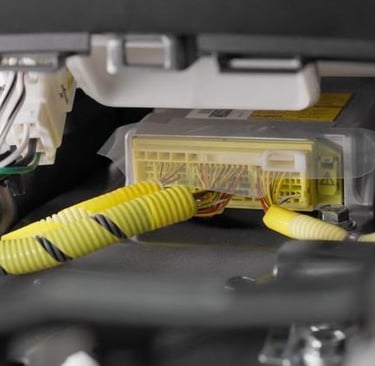
Event Data Recorders and the Airbag Control Module: Unlocking the Truth After a Collision
Modern motor vehicles are no longer purely mechanical machines. They are highly sophisticated data platforms, constantly monitoring driver inputs, vehicle dynamics, and safety systems. At the heart of this technology sits the Event Data Recorder (EDR), most commonly integrated within the Airbag Control Module (ACM). For collision investigators, this system provides an invaluable, objective record of what occurred in the crucial moments before, during, and immediately after a collision.
At CrashUK, our technicians specialise in the forensic interrogation of Event Data Recorders. When used correctly and interpreted by experienced professionals, EDR data can be pivotal in reconstructing collisions, proving liability, resolving disputes, and securing early case settlements in a cost-effective manner.
A Brief History of Airbag Control Modules
Airbag systems first emerged in production vehicles during the late 1970s and early 1980s, primarily as a supplementary restraint to seatbelts. Early systems were relatively simple, using basic crash sensors to deploy airbags during significant frontal impacts. These early airbag control units made deployment decisions based on threshold forces alone and recorded little to no retrievable data.
As vehicle safety technology evolved through the 1990s, airbag systems became more advanced. Manufacturers introduced electronic Airbag Control Modules, capable of processing inputs from multiple sensors, including accelerometers and impact sensors. These modules could differentiate between collision severities, directions, and crash types, allowing for more intelligent deployment strategies.
By the late 1990s and early 2000s, manufacturers began integrating Event Data Recording functionality within the airbag control module. This development was driven by improvements in onboard computing power and a growing recognition of the value of pre-crash and crash data for safety research and collision analysis. The ACM could now store snapshots of vehicle behaviour in the seconds leading up to airbag deployment.
Today’s airbag control modules are highly sophisticated devices, monitoring dozens of parameters hundreds of times per second. They interact with braking systems, stability control, steering sensors, and occupant restraint systems. In many vehicles, the ACM records multiple events, retains non-deployment data, and provides a remarkably detailed digital account of a collision. This evolution has transformed the airbag control module into one of the most powerful tools available to modern collision investigators.
What Is an Event Data Recorder?
An Event Data Recorder is a component within a vehicle that captures and stores data relating to a collision or safety-critical event. In most vehicles, the EDR is part of the airbag control module rather than a standalone device.
Contrary to common misconceptions, EDRs do not record audio or video, nor do they track vehicles continuously. Instead, they capture a short, high-resolution snapshot of vehicle behaviour when a deployment or near-deployment event occurs. This data provides an objective record that is immune to memory lapses, bias, or conflicting witness accounts.
What Information Can Be Recovered?
When interrogated correctly, Event Data Recorders can provide a wealth of information that is vital to collision investigation. Depending on vehicle make, model, and year, available data may include:
Vehicle speed in the seconds leading up to impact
Throttle position and accelerator pedal input
Brake application, including timing and whether braking was attempted
Engine RPM
Steering input and steering wheel angle
Seatbelt status for driver and passengers
Airbag deployment timing and sequence
Delta-V and crash forces, indicating collision severity
Change in velocity (longitudinal and lateral)
Ignition cycles and event timing
Occupant restraint system status
This information allows investigators to determine not just what happened, but how and why it happened. For example, EDR data can confirm whether a driver was speeding, whether evasive action was taken, whether seatbelts were worn, and the severity of forces experienced by vehicle occupants.
How CrashUK Technicians Interrogate Event Data Recorders
At CrashUK, EDR interrogation is conducted by highly trained and experienced technicians using manufacturer-approved and industry-recognised tools and methodologies. The process begins with a careful assessment of the vehicle and the airbag control module to ensure data integrity is preserved.
Modules are accessed either in-vehicle or via controlled bench analysis, depending on the circumstances. Strict forensic procedures are followed to prevent data corruption or loss. Once downloaded, the raw data is analysed, validated, and interpreted within the context of the collision scene, vehicle damage, and other available evidence.
Crucially, EDR data does not stand alone. Our experts integrate digital evidence with physical scene examination, vehicle inspections, CCTV analysis, and witness evidence to produce a clear, defensible understanding of events. The result is a robust, professional opinion that can withstand legal scrutiny.
Why EDR Evidence Is So Powerful
Event Data Recorder analysis provides objective, science-based evidence. It removes ambiguity and reduces reliance on subjective accounts. This makes it particularly valuable in cases involving disputed speeds, allegations of inattention, questions over seatbelt use, or conflicting versions of events.
From a commercial perspective, EDR analysis is also highly cost-effective. Early access to reliable digital evidence can streamline investigations, reduce prolonged disputes, and support early compensation decisions and case settlements. In many cases, EDR evidence can significantly shorten the lifecycle of a claim, saving time and costs for all parties involved.
Why Instruct CrashUK
CrashUK is a specialist Collision Investigation Consultancy with the expertise, equipment, and experience required to unlock the full potential of Event Data Recorders. We understand the urgency of securing digital evidence before it is lost through vehicle repair, disposal, or module degradation.
Our ability to deploy at short notice ensures investigations align with Golden Hour Principles, preserving critical evidence from the outset. We offer a cost-competitive, professional service across the North East of England, Scotland, and the wider United Kingdom.
Contact CrashUK Today
If your case depends on understanding what truly happened in the moments before a collision, Event Data Recorder analysis may be the key. Contact CrashUK today to discuss how our technicians can support your investigation, strengthen your case, and help deliver timely, evidence-based outcomes.
Copyright ©2026 - CrashUK
Working Hours
Monday - Friday 8:00 AM - 8:00 PM
Saturday & Sunday 9:00 AM - 5:00 PM
Please reach out to us via the CONTACT US Page
Email: Enquiries@CrashUK.co.uk